







 Hay Milk® Cheese

 Specialities | Seasonal

 Raw sausage | Game


 Pleasure boxes

 Enjoyment in Sub







News
Purity in Cheesemaking, Aging, and Master Craftsmanship: Why We Only Apply Spices to the Rind | Customer Inquiry
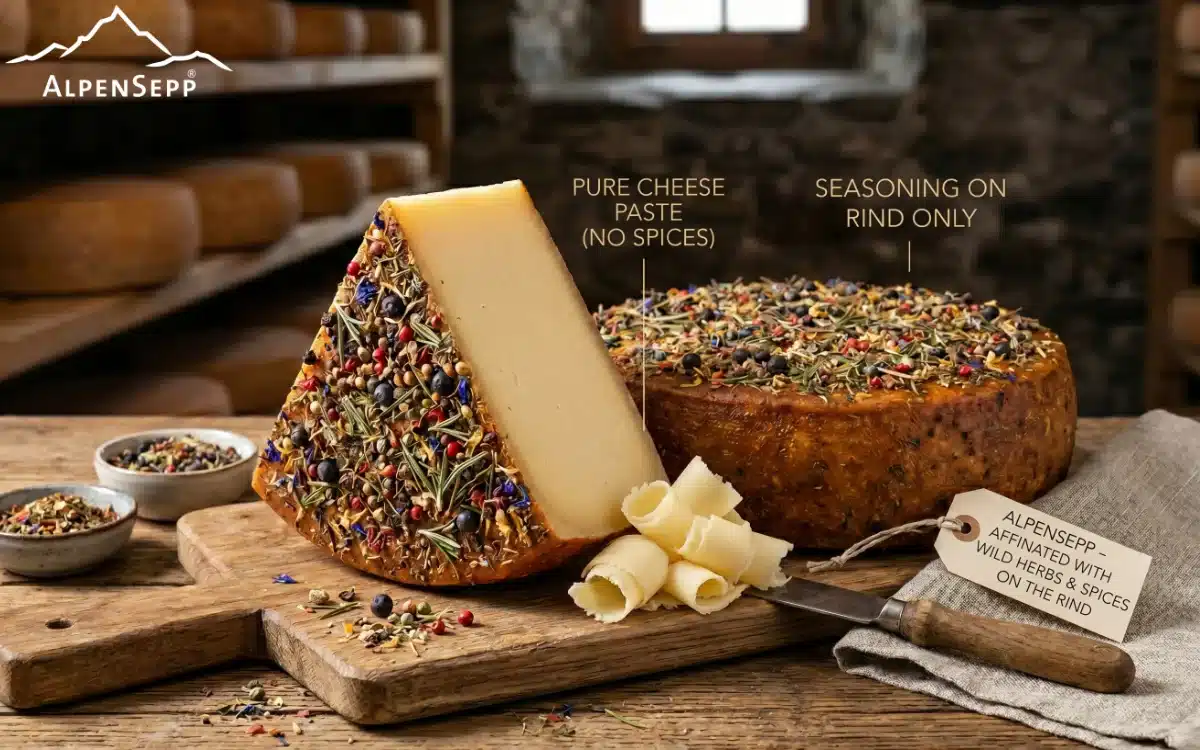
Cheese Topic: Purity, Aging, and Master Craftsmanship: Why We Only Apply Spices to the Rind
At AlpenSepp, the focus is entirely on an honest, pure, and natural product. Our passion lies in the traditional craft of artisanal hay-milk cheesemaking, where time, nature, and the microclimate of the aging cellarThe alpine cheese is best located in a cellar with high humidity. » More info are the most vital ingredients.
Following several customer inquiries and a shared desire for greater transparency, we would like to shed light on a topic that is particularly close to our hearts:
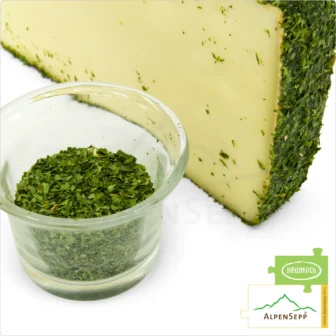
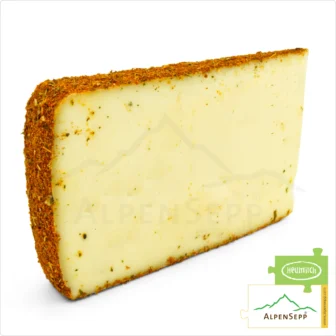
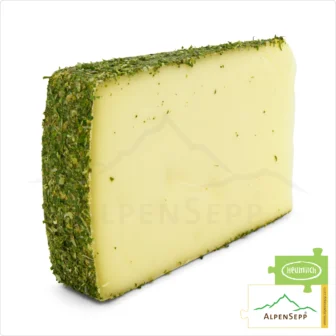
We are frequently asked why our product range does not include cheeses with herbs, chili, or pepper mixed “directly into the cheese curdAs break (or cheese curd) is called in the dairy, the resulting material, which is formed from the milk by the addition of rennet or lactic acid to the milk breakage. » More info,” and why we choose to use premiumHere in Austria, we call our fresh, natural milk for our cheese production hay milk (hay mild standard) - in Germany it is different. » More info spice blends exclusively for affinage (the external refinement of the cheese rindTo protect the cheese wheel, it is put into salt bath or turned into dry salt. The salt removes water from the cheese and it dries faster. So the rind is formed. » More info).
Many customers wonder why some supermarket cheeses are brightly speckled with pieces of herbs, while our artisan products never feature them inside.
The answer touches the core of our qualityDetecting cheese defects and quality - on the cheese dough. Recognizing cheese defects requires some practice. » More info philosophy, the art of natural cheese aging, and concrete microbiological facts. A look behind the scenes reveals why true premium quality and spices inside the paste are inherently incompatible.
1. The Microbiological Risk: Why Spices in the Curd Contaminate the Cheese
From a production and hygiene perspective, mixing dried herbs or spices directly into fresh cheese curds (the unaged cheese paste) represents a severe disruption to a sensitive, living ecosystem.
Cheese ages through the controlled activity of lactic acid bacteriaBacterium Linens (red culture bacteria) are brushed with salt water on the cheese. » More info and enzymesEnzymes are special proteins (biocatalysts) formed in living cells (lab) that accelerate the biochemical conversion of milk. » More info. However, spices and herbs are natural agricultural products harvested from fields and meadows. Even after thorough drying or cleaning, they carry a natural load of microorganismsTo kill off any germs present in the milk, it is briefly heated and then immediately cooled again. » More info.
The single biggest problem for the master cheesemaker comes from bacterial spores (specifically *Clostridium* or *Bacillus* species). These spores are extremely heat-resistant and easily survive the gentle warming processes used in raw milkThe cheese is made from fresh milk, which was not treated at the beginning of the cheese making process (raw milk). It is almost as it comes from the cow's udder. » More info handling or thermization.
The issue: [Fresh Cheese Curd] + [Internal Spices (SporeBaktofugation is a process in which a specially designed hermetic centrifuge is used to separate bacteria and spores of certain bacterial strains from the shell milk. » More info Carriers)] ⇒ (Extended Aging in a Humid Environment) ⇒ Spore Germination & Defective Fermentation ⇒ Spoilage & Poor Shelf Life
When a spiced cheese of this kind is placed in an aging cellar for several months, the following unfolds:
- Spore Germination: The humid, warm, and anaerobicThe cheese ripens here by microbiological and fermentative (caused by enzymes) protein degradation. » More info (oxygen-free) environment deep inside the cheese wheel creates perfect conditions for these spores to germinate.
- Defective Fermentation: Bacteria proliferate, triggering “late blowing” defects, internal cracks, and butyric acid fermentation.
- Spoilage Instead of Maturation: The cheese develops a pungent, rancid, or putrid flavor. It essentially contaminates itself from the inside out.
The Consequence:
A cheese made with spices inside the curd simply cannot undergo long-term aging -the crucial phase where true depth of flavor develops.
It must be sold young, moist, and quickly before the microbiological time bomb goes off. For AlpenSepp’s deeply aged premium cheeses, this method is entirely unsuitable. Our customers value the ability to store and enjoy our cheese at homeRipened cheese likes it cool and moist. The best is a temperature of about 8-10 ° C at about 90% humidity. » More info for an extended periodThe milk period is also called the lactation period. It is the time when farm animals such as cows, sheep or goats keep milk for milk production. » More info -something that would be impossible with spices inside the curd.
2. The Sensory Truth: Masking Flavor vs. True Character
An exceptional alpineThe Vorarlberger Bergkäse (mountain cheese) is a regional cheese specialty from the Austrian province Vorarlberg. » More info or semi-hard cheese derives 100% of its flavor from the quality of the milkCheese milk is the milk intended for the production of cheese, also with the concomitant use of buttermilk products, cream products, sweet whey, sour whey and whey cream (whey cream) » More info and expert aging. Our high-quality hay milkHay milk comes from cows that are fed exclusively with fresh grassland feed, hay and little grain. » More info comes from cows that feed on fresh alpine herbs and grasses in the summer, and sun-dried hay in the winter.
This rich aromatic profile concentrates within the cheese paste as it matures. Proteins and fats gradually break down (lipolysis and proteolysis), yielding those characteristic savory, nutty, and deep flavor notes.
When a dairy mixes spices directly into the curd, there is often a pragmatic – yet disappointing – reason: without those additives, the cheese itself lacks distinct flavor because 1. it was never given the required aging time to develop flavor, or 2. inexpensive silage milk was used (which prevents long-term cellar aging anyway).
| Criteria | Spices Inside the Cheese Curd | AlpenSepp Affinage (Rind Only) |
| Milk Base | Often standardized mass-produced milk | Pure, silage-freeHealthy hay milk comes from cows that are fed exclusively on fresh grassland feed, hay and grain. » More info hay milk |
| Aging Time | Very short (usually just a few weeks) | Long-term aging (3 months to 2 years) |
| Flavor OriginProtection of origin or protection of origin are statutory regulations. » More info | Dominated by added spices | Natural proteolysis & aging process |
| Cheese Character | Masked by external seasonings | Remains pure and fully intact at the core |
A cheese with intense garlic, fenugreek, or chili powder mixed into the curd tastes solely of that spice from the very first bite. The subtle nuances of the milk, the craftsmanship of the cheesemaker, and the character of the aging cellar are completely overwhelmed.
We always answer our customers with complete honesty on this matterThe dry matter refers to that portion of the cheese that remains after removal of the water contained. The more water is removed from the cheese, the lower its dry matter and vice versa. » More info:
For us, that is not refinement – it is masking a lack of maturity and inferior milk quality. True AlpenSepp cheese simply has no need to hide behind mass quantities of artificially added internal spices.
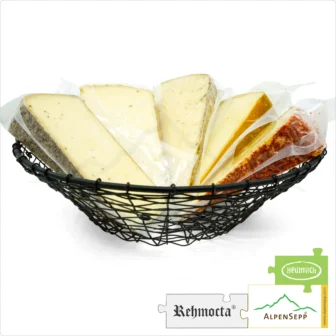
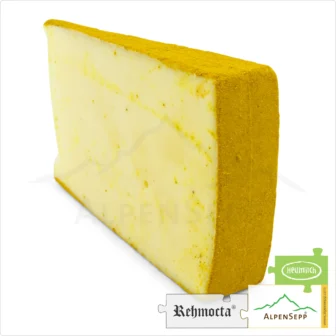
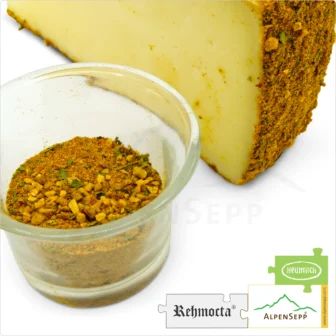
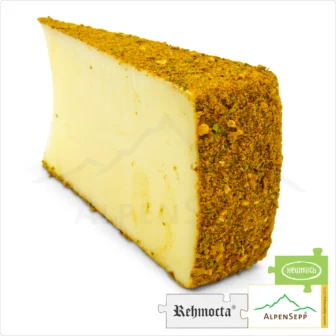
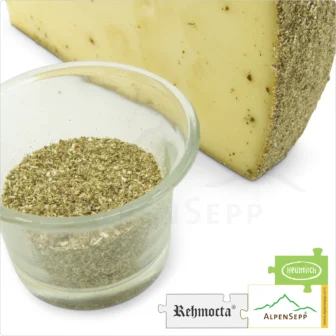
3. The Art of Affinage: Why the Rind is the Perfect Place for Our Rehmocta Cheeses
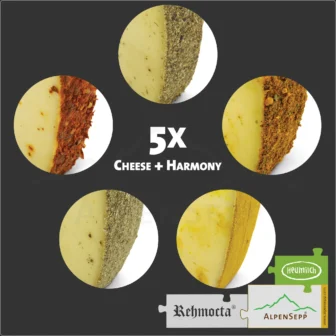
The rind acts as the natural protective coat of the cheese, but for the master affineur (cheese ager), it serves primarily as an aromatic playground. During affinage, we leverage the natural physical principles of osmosis and diffusion.
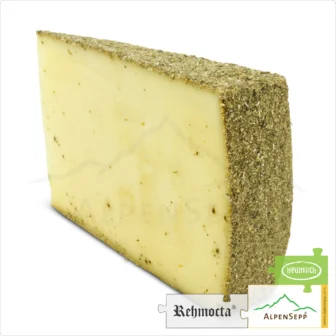
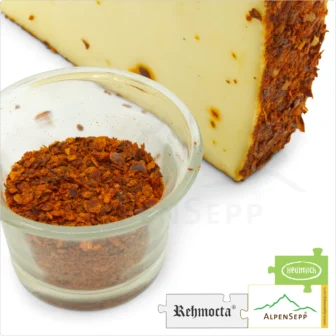
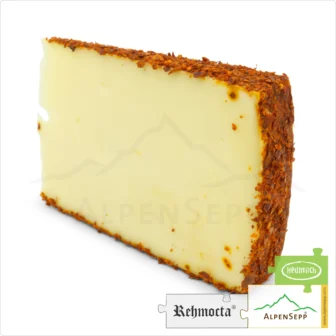
ROUND
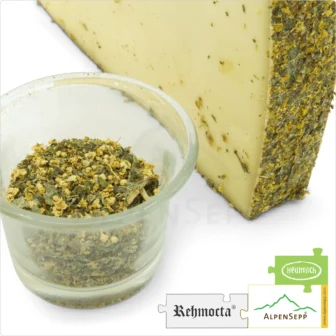
ROUND
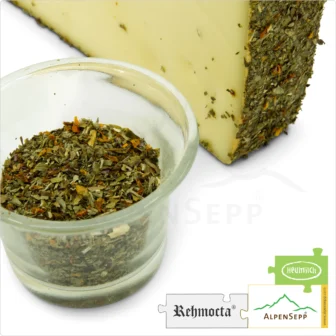
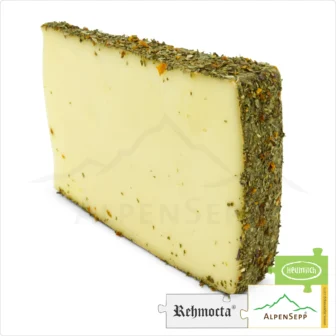
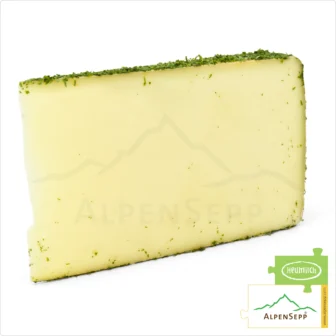
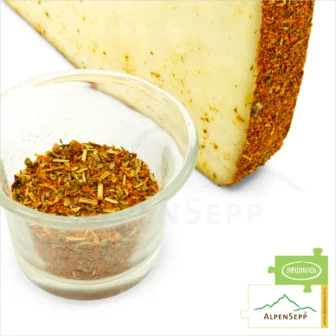
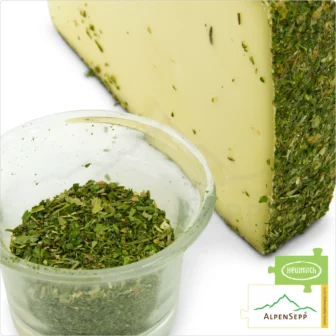
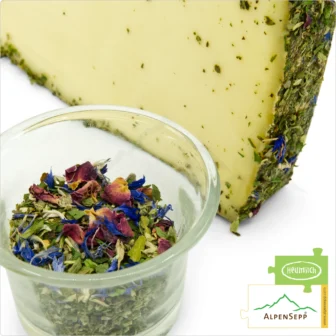
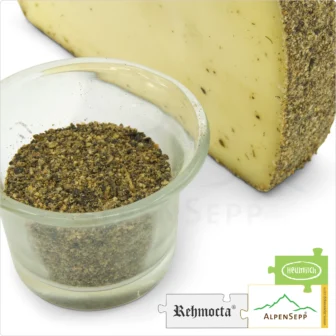
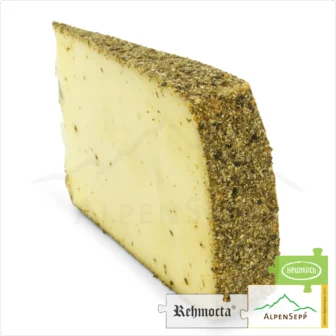
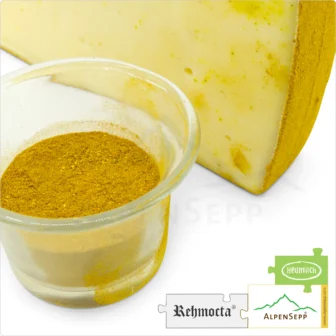
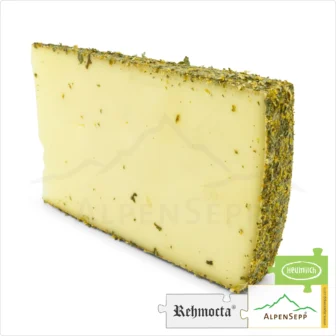
Once the cheese wheel reaches its foundational maturity, firmness, and microbiological stability in the cellar, its rind is meticulously treated with brine, wine, or our select botanical spice blends.
- Controlled Flavor Transfer: Over several weeks, the essential oils from the outer herbal coating gently permeate into the outer layers of the cheese, millimeter by millimeter.
- The Best of Both Worlds: The core of the cheese remains completely pure, retaining its authentic, mature flavor. Meanwhile, the outer region develops a delicate, elegant spice note.
- Palate Harmony: Every connoisseur decides how to enjoy it. Eating the refined rind allows the herb or pepper notes to blend seamlessly with the creamy, savory cheese paste without overwhelming it. Those who prefer the pure cheese aroma can simply trim the rind away.
Conclusion: Respect for the Craft and the Customer
Applying spice blends to the cheese rind requires far more manual effort and craft skill than simply stirring ingredients into a vat. It demands daily care, fine intuition, and absolute cleanliness throughout the aging cellar.
Yet, that extra effort pays off:
We preserve long-term ageability, guarantee maximum microbiological safety, and protect the authentic flavor of our hay milk.
We hope this detailed explanation answers the questions of our valued customers. At AlpenSepp, you can taste the traditional craftsmanship, the Alps, and time itself – refined by nature, but never disguised by it.